

Minister of Construction Tran Hong Minh has called for data bottlenecks to be removed and for a shift from task completion to concrete results and from document-based management to data-driven governance.
The Ministry of Construction held a conference on September 10 to review the implementation of Politburo Resolution No. 57-NQ/TW and its 100-day action plan to address bottlenecks in digital transformation.
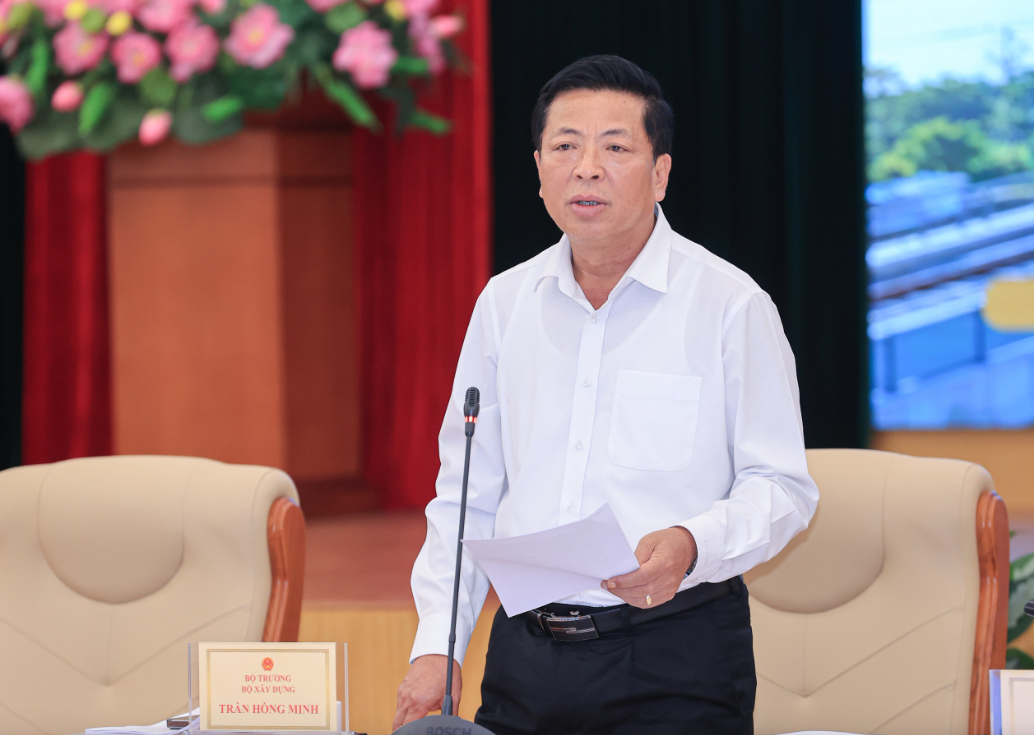
Minister of Construction Tran Hong Minh called for decisive action to eliminate digital transformation bottlenecks under the 100-day action plan.
At the closing session, Minister of Construction Tran Hong Minh said the implementation of the resolution had delivered positive results, with stronger leadership and progress in institutional reform, digital infrastructure, database development, administrative reform, science and technology, and innovation.
The Ministry has also begun developing and operating national and sector-specific databases, strengthening data connectivity and sharing, and using data-driven systems to support management and administration.
However, the Minister noted that several shortcomings remain. Regulations in some areas have not kept pace with development needs, while the digitization of historical data remains slow. The use of data in administrative reform and state management has also fallen short of the resources invested.
Some science and technology research tasks remain insufficiently linked to practical applications, with greater attention sometimes paid to implementation progress than to tangible outputs and effectiveness.
Regarding the 100-day action plan, Minister Tran Hong Minh called for decisive action to remove data-related bottlenecks.
"The overall direction going forward is to shift strongly from completing tasks to producing concrete products and results; from document-based management to data-driven governance; and to use service quality for people and businesses and improved state management capacity as key performance criteria," he said.
The Minister stressed that digital transformation should go beyond completing planned tasks and deliver tangible improvements in management, administration and public services.
"There must be no bottlenecks remaining after 100 days," he said.
To achieve clear improvements, the Minister outlined six key priorities.
First, the Ministry must improve the institutional framework by reviewing and amending regulations and removing obstacles to the creation, management, connectivity, sharing and use of data.
Second, it must accelerate the digitization of historical data, prioritizing information of high value to state management, administrative procedures and public services.
Third, data connectivity and sharing must be strengthened. National and sector-specific databases managed by the Ministry must be connected to the National Data Center and relevant databases of ministries, sectors and localities. Data should then be effectively used and reused for management, administrative procedures and digital operations.
Fourth, administrative procedures must be streamlined and restructured based on available data, eliminating requirements for people and businesses to resubmit information that can already be retrieved from databases.
The Ministry Office was tasked with completing a review of such procedures by September 30, 2026. The Information Technology Center will then implement data connectivity on the Ministry’s administrative procedures information system.
Fifth, the Ministry will promote strategic technologies in high-speed and urban railways, while linking scientific research and innovation more closely with practical needs.
Sixth, cybersecurity must be strengthened. Agencies and units responsible for information systems containing databases classified at Level 3 or higher were instructed to complete required information security assessments and implement approved security measures.
Cybersecurity monitoring systems must also be connected to the National Cybersecurity Monitoring Center, with Level 4 systems to be completed in November.
Minister Tran Hong Minh also called on heads of agencies and units to clearly define responsibilities, tasks, deadlines, outputs and authority, while strengthening monitoring and reporting mechanisms.
"Practical results and effectiveness must be among the criteria for evaluating quarterly and annual performance," he stressed.