

Vietnam’s revised Urban Rural Planning Law backs general master plans as the basis for spatial organization, steering zoning and detailed plans, and ensuring coherent investment and balanced urban–rural growth, Minister Tran Hong Minh said on Friday.
Minister Tran Hong Minh emphasized that developing general master plans for cities is vital to establishing a spatial planning framework that underpins subsequent planning steps and guides sustainable urban and rural development.
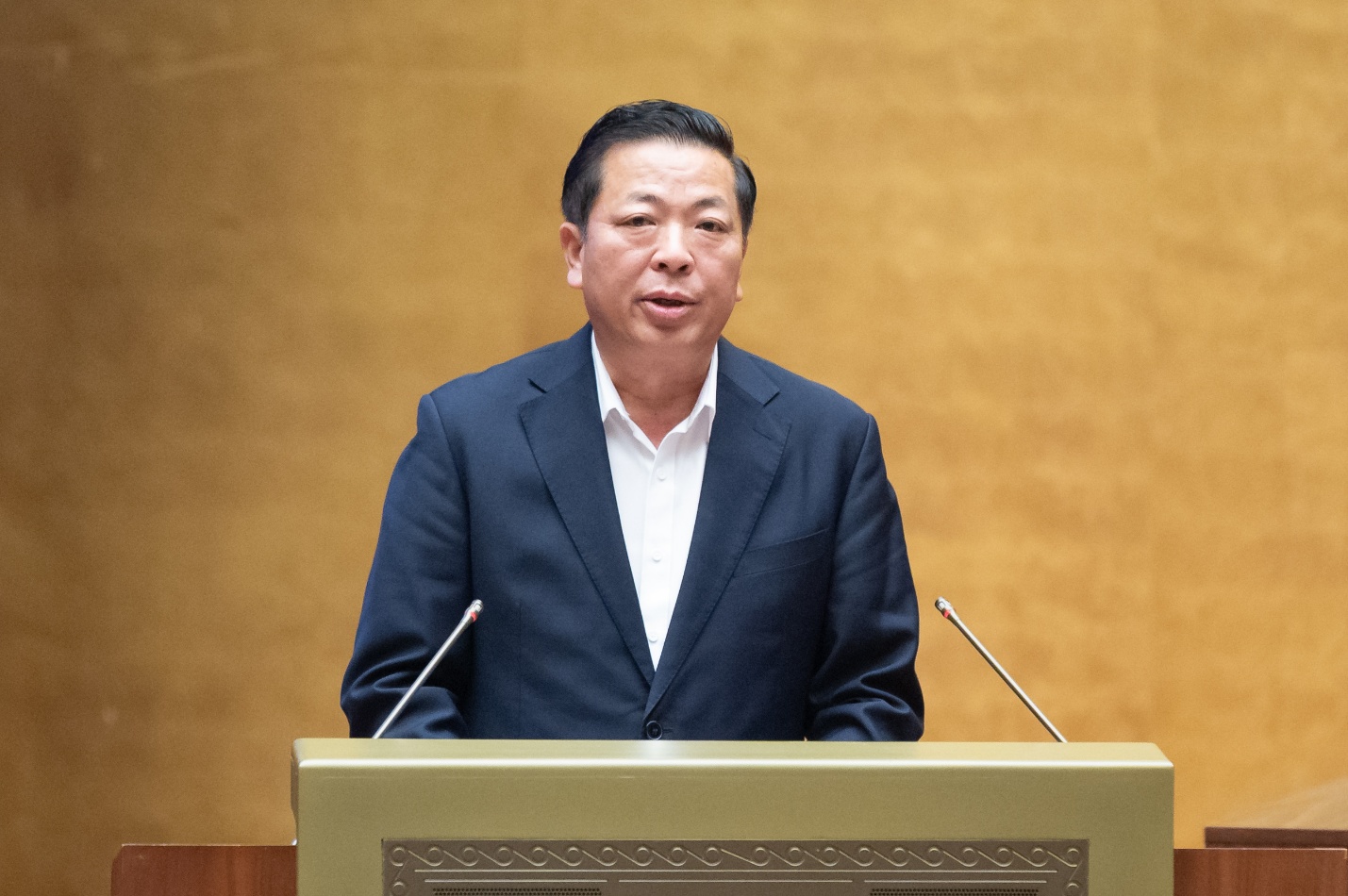
Minister of Construction Tran Hong Minh delivers the explanatory and revision report on the amended Urban and Rural Planning Law.
On December 11, the National Assembly passed amendments to the Law on Urban and Rural Planning with an overwhelming majority. The revised law introduces clearer definitions of urban areas and strengthens the role of planning instruments in shaping national and regional development.
Under the amended law, general master plans will be prepared for cities, provincial urban areas, newly planned areas expected to achieve urban status, economic zones, national tourism zones, and special administrative–economic zones.
Before the vote, Minister Tran Hong Minh presented an explanatory report to the National Assembly, clarifying why general city plans are necessary. Cities, he noted, function as key drivers of socio-economic growth and gateways for international integration. A general master plan sets long-term development visions and provides an overarching framework for organizing spatial structures, technical and social infrastructure, and housing systems.
The revised Planning Law stipulates that provincial planning for centrally governed cities will focus only on strategic directions, avoiding overlap with other planning instruments. Therefore, Minister Tran Hong Minh said, general master plans serve as an essential territorial spatial tool that guides zoning plans, detailed plans, and construction investment.
He added that the drafting agency will continue coordinating with relevant ministries and localities to review practical experiences, especially from pilot mechanisms in Hanoi and Ho Chi Minh City, to inform potential nationwide application of similar planning approaches.