

Emergency response and relief operations have intensified following a powerful earthquake that registered a maximum intensity of 7 on the Japanese seismic scale in Kumamoto Prefecture.
Prime Minister Sanae Takaichi called for swift infrastructure restoration and the provision of adequate shelter environments. Yasushi Kaneko, Minister of Land, Infrastructure, Transport and Tourism (MLIT), instructed officials to remain vigilant regarding potential secondary disasters and further seismic activity, urging agencies to leverage their operational capabilities fully on the ground to support affected communities. In the affected areas, general contractors and regional construction firms have mobilized to conduct emergency repairs, inspect bridge structures with displaced girders, and supply emergency relief items.
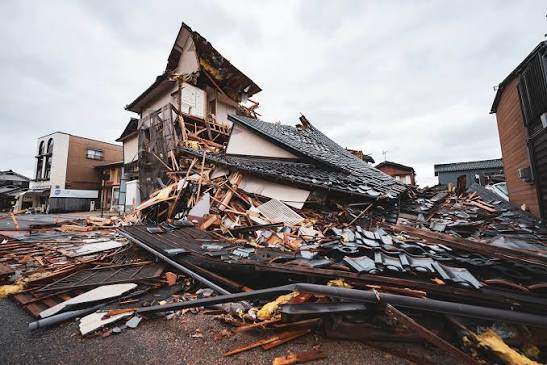
A house damaged by a powerful earthquake in Kumamoto Prefecture, Japan.
The earthquake struck the Kumamoto region at approximately 4:27 PM on July 28, registering a preliminary magnitude of 7.1. Major arterial expressways, including the Kyushu, Minami-Kyushu, and Kyushu-Chuo expressways, sustained extensive damage, including cracked road surfaces and structural damage to bridges, with some bridge girders shifted out of alignment. Major bridge damage on national highways, structural collapses on prefectural roads, and severe slope failures were also confirmed. Rail infrastructure was similarly impacted, with track deformations reported on the Kyushu Shinkansen line. Widespread disruptions to water and power supplies, combined with ongoing high summer temperatures, have heightened concerns over secondary hazards. Additionally, an explosion at a commercial facility and the collapse of a factory chimney were reported.
Following actions taken by the government’s emergency response headquarters, Minister Kaneko convened an Extraordinary Disaster Response Headquarters meeting. He ordered prompt assessments of damage, full execution of emergency restoration measures, timely public information dissemination, and strict monitoring for potential tsunamis. Concurrently, the Ministry of the Environment issued official directives to relevant institutions warning repair personnel against heatstroke hazards during field operations.
Major industry groups—including the Japan Federation of Construction Contractors, and the National General Contractors Association of Japan—have established emergency headquarters to coordinate relief logistics. Technical experts from member firms are actively inspecting compromised bridges, clearing roads blocked by landslides, and delivering critical emergency supplies.
Recalling the 2016 Kumamoto earthquakes, which featured two distinct seismic intensity 7 events, Naoshi Hirata, Professor Emeritus at the Earthquake Research Institute of the University of Tokyo, emphasized the need for continued vigilance against strong aftershocks. He noted that experts are closely monitoring how effectively past seismic retrofitting measures held up, while expressing concern over preventing heatstroke complications during disaster recovery in severe summer weather.