
Japan’s MLIT has unveiled a vision for next-generation ITS to reduce traffic accidents, ease congestion and address environmental challenges through advanced information and communication technology, aiming to improve transport safety and efficiency.
In sections prone to congestion, such as tunnels and merging points, the system will provide support from the roadside to encourage the adjustment of speeds and inter-vehicle distances, while also enabling the direct provision of information to vehicles regarding the presence of pedestrians and bicycles in locations difficult to see from the car. The system also assumes functions such as warnings to following vehicles immediately after an accident and evacuation guidance during disasters. MLIT aims to commence the operation of Next-Generation ITS in the 2030s.
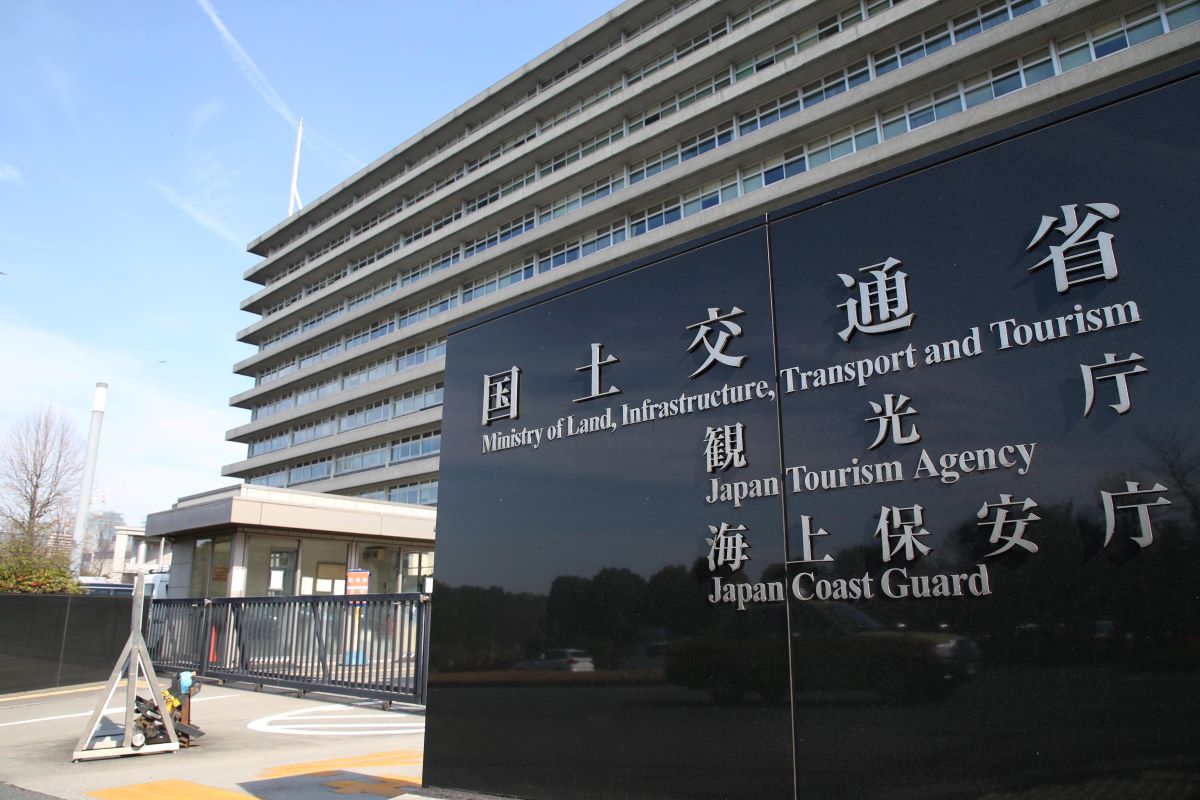
The headquarters of Japan’s Ministry of Land, Infrastructure, Transport and Tourism in Tokyo.
The future vision for ITS was presented at the "Next-Generation ITS Committee" held by MLIT on the 16th. It represents a transformation of roads, which have until now been "passive entities," into "entities that engage in direct dialogue with vehicles to optimize the entirety of traffic and space." Moving forward, the ministry will proceed with the concretization of functions and system designs, public–private joint research, and the consideration and determination of various specifications.
Toward the optimization of road space, the ministry will promote the adjustment of road widths and the reorganization of road space based on the premise of autonomous driving (including driving assistance functions), as well as the "smartification" of road shoulders (usage by time period). Efforts will also be made to secure driving space for priority vehicles, such as emergency vehicles.
For the realization of ITS, "next-generation roadside units"—consisting of communication equipment, sensors, and display boards installed on the roadsides—will play a crucial role. The goal is to equip these units with functions to collect and analyze accident information occurring at intersections with poor visibility, curves, and merging or diverging sections, and to transmit this data to the vehicle side. This is expected to lead to the realization of safe, secure, and sustainable road spaces.