


Leveraging insights gained from commercial service, the company aims to develop a next-generation hydrogen hybrid train, targeting commercial deployment by the end of fiscal 2030.
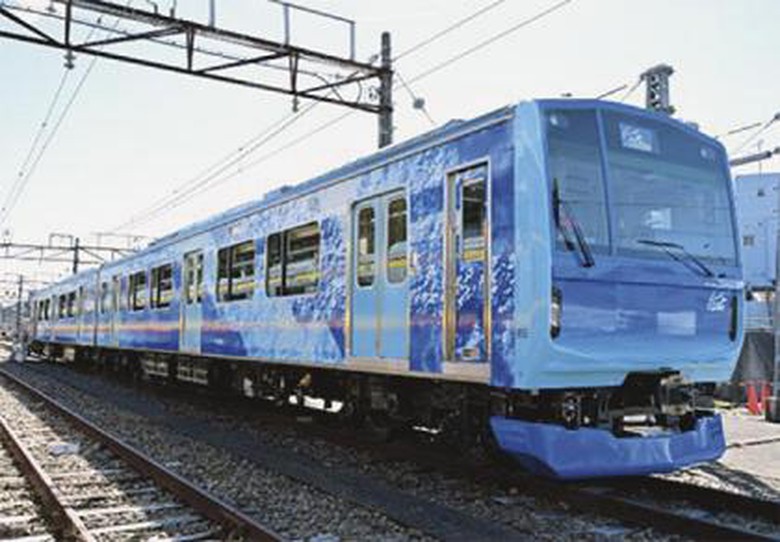
JR East's HYBARI hydrogen hybrid train during demonstration testing.
HYBARI is a hybrid train equipped with a fuel cell system powered by hydrogen alongside storage batteries. Hydrogen supplied to the fuel cell system from storage tanks reacts chemically with oxygen in the air to generate electricity. A key benefit is its zero carbon dioxide emissions during operation. Refueled with high-pressure hydrogen at 35 megapascals, the train can travel approximately 70 kilometers per charge.
JR East has been conducting demonstration trials since 2022 to verify vehicle performance and system stability. Moving forward, the company will use the findings from HYBARI to develop a next-generation train capable of matching the cruising range of conventional diesel vehicles—300 kilometers or more. Utilizing world-first 70-megapascal high-pressure hydrogen, the initiative aims to produce vehicles capable of navigating diverse terrains, including continuous steep gradients. Infrastructure allowing rapid refueling of high-pressure hydrogen will also be established.
"As a solution to environmental issues, we are also considering exporting this technology overseas," explained JR East President Yoichi Kise. To further advance hydrogen utilization, the company will introduce new hydrogen power generation equipment at its Kawasaki Power Plant in Kawasaki City in fiscal 2030, targeting zero carbon emissions by fiscal 2050. Through the conversion of fuel at the facility, JR East has set a goal to ensure that hydrogen accounts for at least 1% of the fuel used in its thermal power generation assets.
Bình luận bài viết (0)
Gửi bình luận